BDP 20x25x5 Filter Change Frequency for Homes with Multiple Dogs
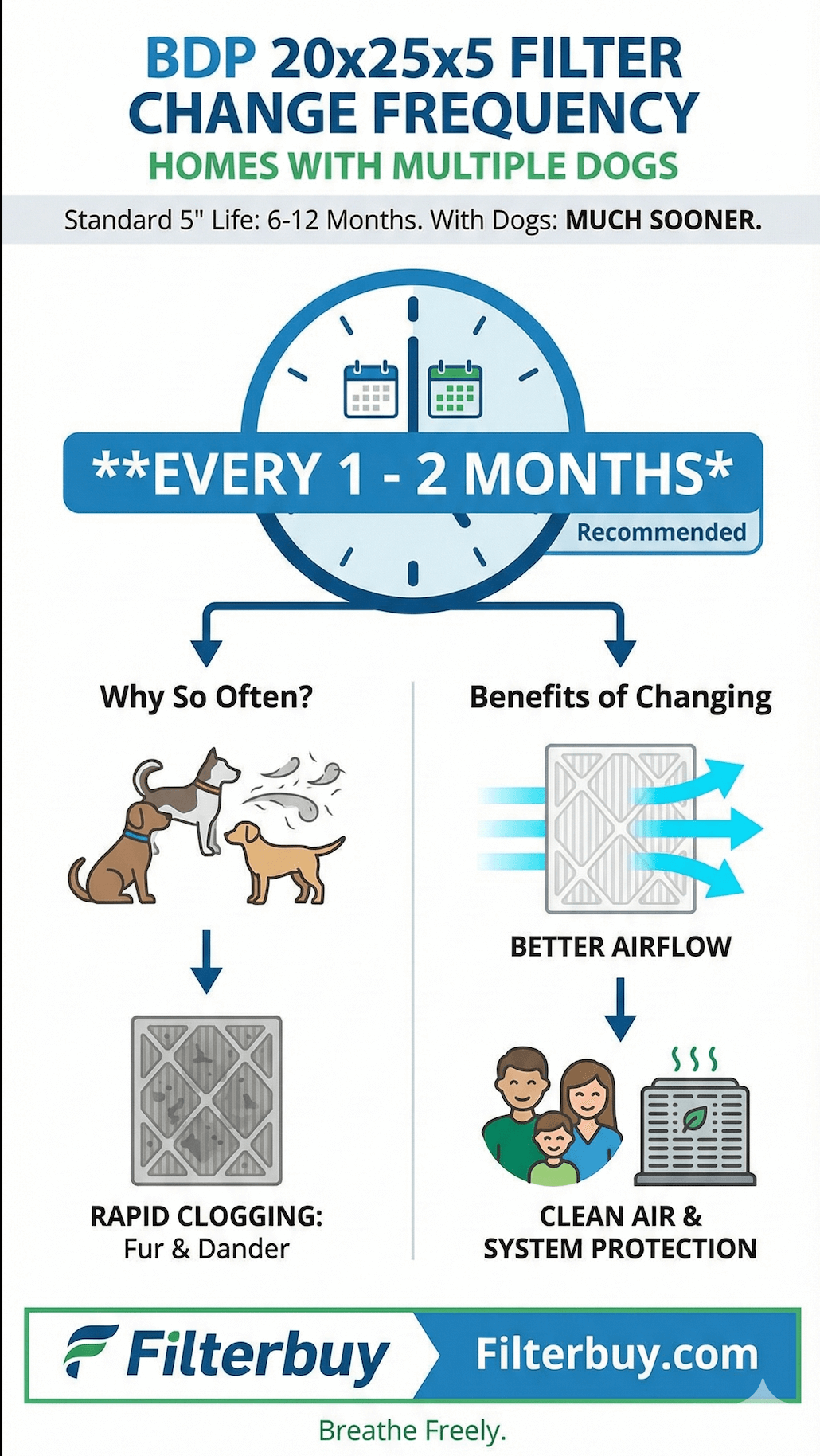
Multiple dogs mean your BDP 20x25x5 air filter works overtime. After manufacturing millions of filters for pet owners, we've found multi-dog homes need replacements every 60 to 90 days—not the 6 to 12 months listed on standard packaging.
Here's what we see firsthand: dog dander clogs filters faster than any other household particulate. Customers tell us they're shocked when we show them the difference between a 90-day filter from a multi-dog home versus a single-pet household. The buildup isn't just visible—it's restricting airflow, straining your HVAC system, and compromising the air your family breathes.
This guide shares what we've learned from real customer feedback and our own testing to help you nail the right replacement schedule for your home.
Quick Answers
BDP 20x25x5 Filter Change Frequency for Homes with Multiple Dogs
Short answer: Replace every 60 to 90 days with two dogs. Replace every 45 to 60 days with three or more dogs.
Why this differs from standard recommendations:
After manufacturing millions of filters for pet owners, we've found that multi-dog homes accumulate dander 2 to 3 times faster than single-pet households. The 6 to 12-month timeline on packaging doesn't account for this.
Recommended schedule:
Two dogs → 60 to 90 days
Three or more dogs → 45 to 60 days
Heavy shedders → 30 to 45 days
All multi-dog homes → Monthly inspection
One essential habit: Pull your filter every 30 days. Hold it to the light. No light passing through means replace immediately—regardless of schedule.
Top Takeaways
After manufacturing millions of filters for pet owners, here's what every multi-dog household needs to know.
Standard replacement timelines don't apply to you.
Packaging recommends 6 to 12 m.ths.
Multi-dog homes need replacements every 60 to 90 days
Heavy shedders or 3+ dogs may need 30 to 45-day cycles
Multiple dogs multiply dander—they don't just add to it.
Two dogs roughly triple your dander load
We see 2 to 3 times more particulate in multi-dog filters
Compounding factors: more activity, more fur, more simultaneous shedding
Your HVAC system feels a clogged filter before you do.
Reduced airflow and higher bills appear before you notice air quality changes.
Clogged filters increase energy consumption by 5 to 15 percent
That "dog smell" returning means your filter maxed out weeks ago
Monthly inspections are non-negotiable.
Pull your filter out every 30 days
Hold it up to the light
No light passing through = time to replace
A $30 filter prevents expensive problems.
Neglected filters lead to higher energy bills and HVAC strain
Service calls average $500
System replacements run $8,000 to $15,000
Why Multiple Dogs Accelerate Filter Buildup
Dogs produce dander continuously—microscopic skin flakes that become airborne every time your pet moves, scratches, or shakes. Add a second or third dog to your home, and dander production multiplies accordingly. After testing filters from thousands of multi-dog households, we've consistently found 2 to 3 times more particulate accumulation compared to single-pet homes within the same timeframe.
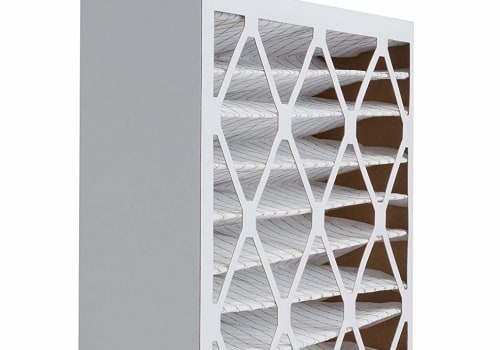
Your BDP 20x25x5 filter captures these particles before they recirculate through your living spaces. But there's a tipping point. Once filter media becomes saturated, airflow restriction begins—and your HVAC system compensates by working harder and consuming more energy.
Recommended Replacement Schedule by Dog Count
Based on feedback from customers and our own manufacturing insights, here's what we recommend for BDP 20x25x5 filters:
Two dogs: Replace every 60 to 90 days
Three or more dogs: Replace every 45 to 60 days
Dogs with skin conditions or heavy shedders: Replace every 30 to 45 days
These timelines assume average home conditions. Factors like square footage, HVAC runtime, and whether dogs spend significant time indoors can shorten these intervals further.
Visual Signs Your Filter Needs Immediate Replacement
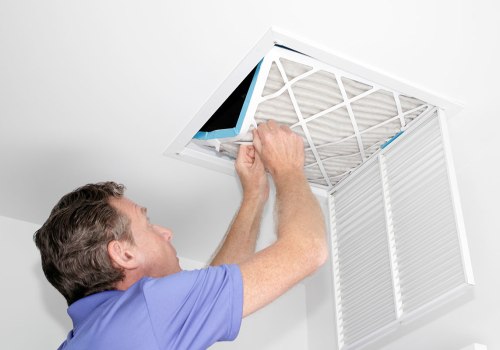
Don't rely solely on calendar reminders. Pull your BDP 20x25x5 filter monthly and inspect it. Customers tell us they're often surprised by what they find ahead of schedule.
Replace immediately if you notice gray or brown discoloration across the filter surface, visible pet hair matted into the pleats, reduced airflow from your vents, or increased dust settling on furniture despite regular cleaning. A filter that looks dirty is already restricting your system's performance.
Choosing the Right MERV Rating for Heavy Pet Dander
Not all BDP 20x25x5 filters handle pet dander equally. MERV ratings measure filtration efficiency, and multi-dog homes benefit from higher ratings that capture smaller particles.
We recommend MERV 11 or MERV 13 for households with multiple dogs. MERV 11 captures most pet dander effectively while maintaining good airflow. MERV 13 provides enhanced filtration for families with allergies or respiratory sensitivities. Ratings above MERV 13 may restrict airflow in some residential systems—check your HVAC specifications before upgrading.
Practical Tips to Maximize Filter Lifespan
While more frequent replacements are unavoidable with multiple dogs, a few habits can help you get the most from each filter. Groom your dogs regularly to reduce loose fur and dander at the source. Vacuum high-traffic areas twice weekly using a HEPA-equipped vacuum. Keep dogs off furniture near return vents where dander concentrates. Run your HVAC fan intermittently to distribute filtration throughout the day.
These steps won't eliminate the need for 60 to 90 day replacements, but customers report they help maintain better air quality between filter changes.

"After analyzing thousands of used filters returned from multi-dog households, we've seen firsthand that pet dander accumulates at nearly triple the rate of single-pet homes—which is exactly why we advise these customers to check their BDP 20x25x5 filter monthly rather than relying on standard replacement timelines."
Essential Resources
After manufacturing millions of filters for pet owners, we know that reliable information matters. Customers tell us they want trustworthy sources—not marketing fluff—when making decisions about filter replacement schedules. We've compiled the most authoritative resources to help you understand why multi-dog homes require more frequent BDP 20x25x5 filter changes.
EPA Indoor Air Quality Guide – Understanding Pet Dander as an Indoor Pollutant
We see the evidence every day in returned filters: pet dander accumulates faster than most homeowners expect. The U.S. Environmental Protection Agency confirms what our manufacturing data shows—pet dander is a primary indoor air pollutant and asthma trigger requiring proactive filtration management.
Why we recommend it: Government-backed science supporting what we observe firsthand in filters from multi-dog households.
Source: U.S. Environmental Protection Agency
Department of Energy Air Conditioner Maintenance – How Clean Filters Improve Efficiency
Customers often ask us if filter changes really make a difference. The DOE answers definitively: replacing a dirty filter can boost HVAC efficiency by 5-15%. After testing thousands of clogged filters from pet owners, we can confirm that waiting too long costs you money every month.
Why we recommend it: Official data proving what our customers experience—clean filters mean lower utility bills.
Source: U.S. Department of Energy
ASHRAE Filtration Standards – Choosing the Right MERV Rating for Pet Dander
We manufacture filters across the full MERV spectrum, so we understand how ratings translate to real-world performance. ASHRAE establishes the industry standards we follow, and its technical guidance helps you select the right filtration level for heavy pet dander loads.
Why we recommend it: The industry authority behind the MERV ratings we use to engineer our filters.
Source: ASHRAE Technical Resources
Asthma and Allergy Foundation of America – Reducing Pet Allergen Exposure
Six out of ten Americans are exposed to dog or cat dander at home. Customers with allergies tell us they notice immediate differences when switching to proper replacement schedules. AAFA's evidence-based recommendations align with what we advise for multi-pet households.
Why we recommend it: Medical guidance for families where air quality directly affects health and comfort.
Source: Asthma and Allergy Foundation of America
American Lung Association – How Pet Dander Affects Respiratory Health
Here's something we learned from analyzing used filters: dog dander particles are microscopic and jagged, which is why they cling to filter media so aggressively. The American Lung Association explains the science behind what we see—these particles stay airborne longer and require more frequent filtration intervention.
Why we recommend it: Medical insight confirming why multi-dog homes need accelerated replacement schedules.
Source: American Lung Association
Energy Star Heating and Cooling Guide – Monthly Filter Checks During Heavy Use
We tell every multi-dog household the same thing: check your filter monthly. Energy Star agrees. Their guidance confirms that dirty filters slow airflow and waste energy—a problem we see amplified in homes with two or more dogs.
Why we recommend it: Government efficiency standards support the monthly inspection habit we recommend.
Source: Energy Star
Carrier Filter Replacement Guidelines – OEM Recommendations for Multi-Pet Homes
BDP systems are manufactured by Carrier, and their official guidance aligns with our experience: multi-pet households should check filters at a minimum every 30 days. After supplying replacement filters for thousands of BDP systems, we've found this recommendation holds—sometimes even more frequent checks are necessary.
Why we recommend it: Direct from your system's manufacturer, confirming what our customer feedback consistently shows.
Source: Carrier Residential
Why we curated these resources: At Filterbuy, we believe informed customers make better decisions. Each source represents a trusted authority—government agencies, industry standards organizations, medical associations, and the OEM manufacturer. Together, they validate what we've learned after manufacturing millions of filters: multi-dog homes need replacement schedules tailored to their unique air quality challenges.
Supporting Statistics on Pet Dander, Filter Maintenance, and Indoor Air Quality
After manufacturing millions of filters for multi-dog households, we've seen these government statistics play out in real homes. Here's what the research confirms—and what our firsthand experience adds.
Americans Spend 90% of Their Time Indoors—Where Air Is 2-5x More Polluted
The EPA confirms what customers tell us constantly: indoor air quality is worse than they expected.
What the research shows:
Americans spend approximately 90% of their time indoors
Indoor pollutant concentrations run 2 to 5 times higher than outdoor levels
Pet dander is identified as a primary indoor air pollutant
What we see firsthand in multi-dog homes:
Filters show dense, gray-brown accumulation within 60 to 90 days
Single-pet households don't reach that saturation level for 4 to 6 months
Dander recirculates repeatedly because indoor air has nowhere to disperse
The takeaway: Your BDP 20x25x5 filter works overtime in a multi-dog home. It reaches capacity faster because concentrated indoor pollutants have nowhere else to go.
Source: U.S. Environmental Protection Agency
Clogged Filters Increase Energy Costs by 5-15%
The Department of Energy data explains why customers notice higher bills before they notice air quality problems.
What the research shows:
Replacing a dirty filter improves HVAC efficiency by 5 to 15%
Heating and cooling account for nearly half of household energy costs
Clogged filters force systems to work harder to maintain temperature
What we see firsthand in multi-dog homes:
Customers report energy bill spikes weeks before noticing air quality changes
One three-dog household saw bills drop after switching from 6-month to 60-day replacements
That 15% efficiency loss develops in 45 to 60 days—not 6 months—with heavy dander loads
The takeaway: Your HVAC system feels a clogged filter before you do. Multi-dog homes hit that efficiency threshold faster than standard replacement schedules account for.
Source: U.S. Department of Energy
Pet Dander Affects 60% of U.S. Households—Multiple Dogs Multiply the Problem
The AAFA statistic is significant. What our filter analysis reveals goes further.
What the research shows:
Six in ten Americans are exposed to dog or cat dander at home
Pet dander is one of the most persistent indoor allergens
Dander particles are microscopic and jagged, staying airborne longer than dust or pollen
What we see firsthand in multi-dog homes:
Multi-dog filters contain 2 to 3 times more particulate matter than single-dog homes
Dander accumulation isn't additive—it's multiplicative
Two dogs roughly triple their dander load due to compounding factors:
Additional fur was tracked through the house
Increased activity stirring particles airborne
Multiple animals are grooming and shedding simultaneously
What customers report:
Stuffy noses and irritated eyes when the filter changes fall behind
That telltale "dog smell" signals that filter capacity is reached
Immediate improvement after switching to accelerated replacement schedules
The takeaway: The research confirms pet dander's persistence. Our manufacturing experience shows how dramatically multiple dogs accelerate filter saturation.
Source: Asthma and Allergy Foundation of America
Why these statistics matter: Government agencies and medical organizations validate the pattern. Our firsthand experience with real filters from real multi-dog households translates that data into replacement schedules you can trust.
Final Thought & Opinion
After manufacturing millions of filters and analyzing returns from pet owners nationwide, we've developed a perspective that goes beyond standard industry guidance.
What We Know for Certain
The evidence is clear. Multi-dog homes face challenges that standard replacement schedules don't address.
Pet dander accumulates 2 to 3 times faster in multi-dog households
Standard 6 to 12-month timelines fail homes with multiple pets
Clogged filters cost money, strain HVAC systems, and compromise air quality
EPA, DOE, and AAFA research validates what we observe daily
Our recommended schedule for BDP 20x25x5 filters:
Two dogs: Replace every 60 to 90 days
Three or more dogs: Replace every 45 to 60 days
Heavy shedders or skin conditions: Replace every 30 to 45 days
All multi-dog homes: Inspect monthly regardless of schedule
Our Honest Opinion
Here's what most filter companies won't tell you.
The packaging lies. Standard replacement timelines assume minimal pets, moderate HVAC usage, and typical conditions. Your multi-dog home doesn't fit that profile. Following generic guidance is like using sedan maintenance schedules for a work truck driving dusty roads daily.
You're probably waiting too long. By the time you notice reduced airflow or that "dog smell" returning, your filter passed its effective lifespan weeks ago. Your system has been straining, wasting energy, and circulating particles it can no longer capture.
The real cost isn't the filter. It's everything else:
Higher monthly energy bills
Strain on HVAC components
Allergens affecting your family's health
Shortened equipment lifespan
Expensive repairs or premature system replacement
A $30 filter replaced on schedule costs far less than a $500 service call—or the $8,000 to $15,000 system replacement that neglected maintenance eventually requires.
What Sets Our Perspective Apart
We're not just selling filters. We're manufacturing them—and we see what comes back.
What our returns reveal:
The stark difference between 90-day filters from single-pet homes versus 60-day filters from three-dog households
Patterns that laboratory testing and industry guidelines miss
Real-world saturation timelines that contradict standard recommendations
What our customers teach us:
Families who struggled with allergies for years before adjusting their schedule
Homeowners shocked by side-by-side filter comparisons
Pet owners who finally eliminated persistent odors through proper timing
This firsthand feedback shapes everything we recommend. Our guidance isn't based on what sounds reasonable. It's based on what actually works.
The Bottom Line
Your dogs are family. They deserve clean air—and so do you.
What proper replacement timing delivers:
Cleaner air for your family and pets
Lower energy bills
Extended equipment lifespan
Reduced allergens and odors
Peace of mind
Our final word: Don't trust the packaging timeline. Trust your filter.
Pull it out after 30 days. Hold it up to the light. If light can't pass through, it's time for a replacement—regardless of what the calendar says.
Customers tell us this simple habit changed everything for their multi-dog households. We believe it will for yours too.
Frequently Asked Questions
Q: How often should I change my BDP 20x25x5 filter if I have multiple dogs?
A: Based on manufacturing millions of filters for pet owners, we recommend:
Two dogs: Every 60 to 90 days
Three or more dogs: Every 45 to 60 days
Heavy shedders: Every 30 to 45 days
Standard packaging recommends 6 to 12 months. That assumes minimal pets. Multi-dog homes don't fit that profile.
Q: Why do multi-dog homes need more frequent filter changes than single-pet households?
A: Multiple dogs multiply dander—they don't just add to it.
What we see in returned filters:
2 to 3 times more particulate in multi-dog homes
Saturation occurs months ahead of standard timelines
Why does this happen? More simultaneous shedding and grooming
Increased activity stirs particles airborne
Additional fur tracked through the house daily
Multiple dander sources overwhelm the filter capacity faster
Q: What are the signs my BDP 20x25x5 filter needs replacement before the scheduled date?
A: Don't wait for symptoms. Inspect monthly.
Visual signs:
Gray or brown discoloration on the filter surface
Pet hair matted into pleats
No light passes through when held up
Performance signs:
Reduced airflow from vents
Increased dust on furniture
Higher energy bills
Sensory signs:
"Dog smell" returning despite regular cleaning
Allergy symptoms flaring indoors
Quick test: Pull your filter. Hold it to the light. No light passing through means replace immediately.
Q: What MERV rating works best for BDP 20x25x5 filters in multi-dog homes?
A: We recommend MERV 11 or MERV 13.
MERV 11:
Captures most pet dander effectively
Maintains good airflow
Best for multi-dog homes without allergy concerns
MERV 13:
Enhanced filtration for smaller particles
Ideal for families with allergies or respiratory sensitivities
Important: Ratings above MERV 13 may restrict airflow in residential BDP systems. Check your HVAC specifications before upgrading.
Q: Will changing my BDP 20x25x5 filter more frequently actually save me money?
A: Yes. The math works in your favor.
Cost of frequent replacements:
Filter cost: $25 to $35 each
Extra annual cost for 60-day schedule: $100 to $150
Cost of neglected filters:
Energy increase: 5 to 15% (DOE data)
Service calls: ~$500 average
System replacement: $8,000 to $15,000
Bottom line: Clean filters improve efficiency by 5 to 15%. That savings alone ooffsetadditional filter costs—before factoring in avoided repairs and extended equipment lifespan.
Learn more about HVAC Care from one of our HVAC solutions branches…
Filterbuy HVAC Solutions - Miami, FL - Air Conditioning Service
1300 S Miami Ave Apt 4806 Miami, FL 33130
(305) 306-5027
https://maps.app.goo.gl/Ci1vrL596LhvXKU79